

Tracking investments across multiple accounts can be tricky. It’s important to stay organized.
Managing investments in various accounts can feel overwhelming, especially if you’re trying to keep track of performance, fees, and overall growth. But it doesn’t have to be. With the right tools and strategies, you can easily monitor your investments, ensuring you make informed decisions to grow your wealth.
In this blog post, we’ll explore simple and effective ways to track your investments across multiple accounts, making the process less daunting and more manageable. Whether you’re a seasoned investor or just starting, this guide will help you streamline your investment tracking and keep your financial goals on track.
Introduction To Tracking Investments
Tracking investments is crucial for managing your financial future. It helps you understand your assets’ performance, make informed decisions, and reach your financial goals. But the task becomes complex when you have multiple investment accounts.
Importance Of Tracking
Why is tracking your investments important? It offers several benefits:
- Performance Evaluation: You can see how each investment performs over time.
- Risk Management: Identifying underperforming assets helps reduce risk.
- Tax Efficiency: Keeping track helps you optimize for tax benefits.
- Goal Alignment: Ensures your investments align with your financial goals.
Challenges With Multiple Accounts
Managing multiple investment accounts can be a daunting task. Here are some challenges you might face:
- Data Overload: Multiple accounts mean more data to manage.
- Inconsistent Formats: Different platforms use different formats, complicating tracking.
- Time-Consuming: Manually updating information is time-consuming.
- Errors: More accounts increase the chances of making errors.
To simplify, you can use tools and methods designed for tracking multiple investments. They save time and reduce errors. Below is a table comparing some popular tools:
| Tool | Features | Cost |
|---|---|---|
| Tool A | Automatic updates, risk analysis | Free |
| Tool B | Tax optimization, performance reports | $10/month |
| Tool C | All-in-one dashboard, alerts | $5/month |
Using these tools can make tracking investments easier and more efficient. Choose a tool that fits your needs and budget.

Credit: www.kubera.com
Setting Financial Goals
Tracking investments across multiple accounts can seem complex. Setting clear financial goals simplifies the process. Goals provide direction and help measure progress. They ensure your investment strategy aligns with your needs.
Short-term Goals
Short-term goals are those you aim to achieve within a year. Examples include saving for a vacation or building an emergency fund. These goals require low-risk investments. Consider savings accounts or short-term bonds. Review your progress monthly. Adjust your strategy if needed.
Long-term Goals
Long-term goals span several years. These may include retirement or buying a house. Long-term goals allow for higher-risk investments. Stocks, real estate, and mutual funds are good options. Monitor these investments quarterly. Make sure they are on track to meet your goals.
Choosing Investment Tracking Tools
Choosing the right investment tracking tools can make managing multiple accounts easier. With various options available, it’s essential to understand which tools fit your needs. Let’s explore some of the best options to help you stay on top of your investments.
Online Platforms
Online platforms offer a comprehensive way to track investments. They provide detailed reports and real-time updates. Here are some of the most popular ones:
- Personal Capital: Known for its robust features and user-friendly interface.
- Mint: Offers a wide range of tools, including investment tracking.
- Morningstar: Provides in-depth analysis and research tools.
These platforms typically offer the following benefits:
| Feature | Personal Capital | Mint | Morningstar |
|---|---|---|---|
| Real-time updates | Yes | Yes | Yes |
| Detailed reports | Yes | Yes | Yes |
| In-depth analysis | Yes | No | Yes |
Using online platforms can simplify investment tracking by aggregating data from various accounts. They often include features like budgeting tools, net worth tracking, and more.
Mobile Apps
Mobile apps provide a convenient way to manage investments on the go. They offer many of the same features as online platforms but in a mobile-friendly format.
- Acorns: Ideal for beginners with its automatic investment feature.
- Robinhood: Allows commission-free trades and easy portfolio tracking.
- Stash: Offers personalized investment advice and educational resources.
These apps are designed for ease of use and accessibility. Key benefits include:
| Feature | Acorns | Robinhood | Stash |
|---|---|---|---|
| Automatic investments | Yes | No | No |
| Commission-free trades | No | Yes | No |
| Educational resources | Yes | No | Yes |
Mobile apps are perfect for those who prefer to manage their investments from their smartphones. They offer convenience and flexibility, making it easy to keep track of your investments anytime, anywhere.
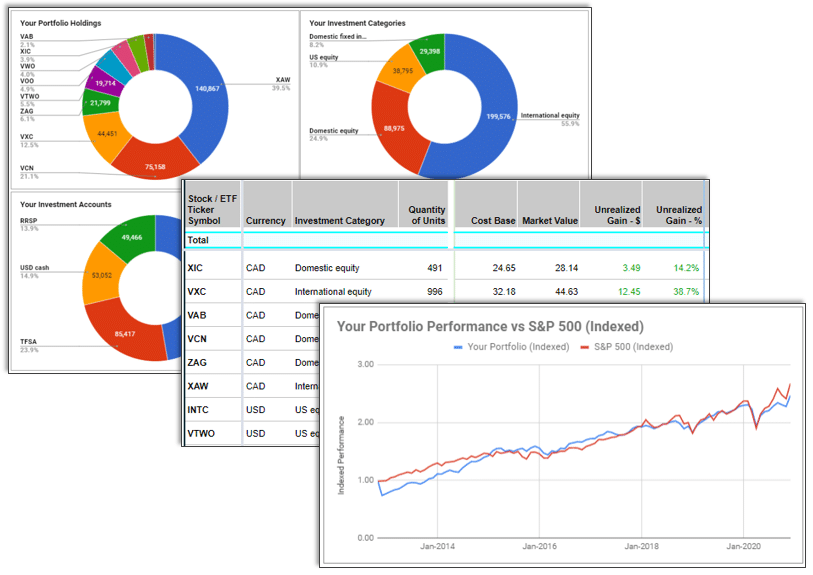
Credit: themeasureofaplan.com
Consolidating Investment Accounts
Managing investments across multiple accounts can be complex. Consolidating investment accounts can simplify the process and provide a clearer picture of your financial health. This guide will explore the benefits of consolidation and provide steps to help you consolidate your accounts efficiently.
Benefits Of Consolidation
Consolidating investment accounts offers several advantages:
- Streamlined Management: Fewer accounts mean less paperwork and easier tracking.
- Reduced Fees: Combining accounts can help lower management fees.
- Better Investment Strategy: A single view helps in strategizing better.
- Improved Performance Tracking: Easier to monitor overall portfolio performance.
- Tax Efficiency: Simplifies tax reporting and can improve tax efficiency.
Steps To Consolidate
Follow these steps to consolidate your investment accounts:
- Review Your Accounts: List all your investment accounts and their details.
- Evaluate Fees and Performance: Compare fees and performance of each account.
- Choose a Primary Account: Select the account with the best features and performance.
- Transfer Assets: Move assets from other accounts to the primary account.
- Update Records: Ensure your records are up to date after the consolidation.
Use a table to compare the features and fees of different accounts:
| Account | Fees | Performance | Features |
|---|---|---|---|
| Account A | 1.5% | 8% annual return | Low fees, good performance |
| Account B | 2.0% | 7% annual return | Diverse investment options |
| Account C | 1.2% | 6% annual return | Low fees, limited options |
Monitoring Performance
Tracking investments across multiple accounts can be challenging. To succeed, you need to regularly monitor performance. This helps you understand how your investments are doing. By keeping an eye on key metrics, you can make informed decisions. Let’s explore how to track these metrics and set up a review schedule.
Key Metrics To Watch
Monitoring the right metrics is crucial. Here are some key metrics to focus on:
- Rate of Return: This shows how much your investment has earned or lost over time.
- Volatility: This measures the risk by showing how much the investment’s price fluctuates.
- Asset Allocation: This indicates how your investments are distributed across different asset classes.
- Expense Ratio: This represents the fees associated with managing your investments.
- Benchmark Comparison: This helps you compare your investment’s performance to a standard benchmark.
Regular Review Schedule
Having a regular review schedule is important. It ensures you stay on top of your investments. Here is a simple plan:
| Frequency | Action |
|---|---|
| Monthly | Check the rate of return and expense ratio. |
| Quarterly | Review asset allocation and volatility. |
| Annually | Compare performance to benchmarks and adjust as needed. |
This schedule helps you identify any changes needed. Regular reviews can prevent small issues from becoming big problems.
Diversifying Investments
Investing in multiple accounts can be complex. One way to manage this complexity is through diversifying investments. By spreading your investments across different assets, you can reduce risk and increase potential returns.
Types Of Diversification
Diversification involves spreading your investments across various asset classes. Here are some common types:
- Asset Class Diversification: Invest in stocks, bonds, real estate, and commodities.
- Geographical Diversification: Invest in both domestic and international markets.
- Sector Diversification: Invest in different industries like technology, healthcare, and finance.
Diversifying within these categories can help you manage risk better. For example, if one sector underperforms, other sectors might compensate.
Balancing Risk
Balancing risk is crucial in investment. Here’s how you can achieve it:
- Assess Your Risk Tolerance: Understand how much risk you can handle. Are you conservative or aggressive?
- Allocate Assets Accordingly: If you prefer low risk, allocate more to bonds. For higher risk, focus on stocks.
- Review Regularly: Periodically review and adjust your portfolio. Markets change, and so should your strategy.
Balancing risk helps you stay prepared for market fluctuations. It ensures that your investments grow steadily over time.
Tax Implications
Tracking investments in multiple accounts can be complex. One key aspect to consider is the tax implications. Understanding tax implications can save you money and avoid legal issues. Let’s dive into two important areas: Capital Gains Tax and Tax-Efficient Investments.
Capital Gains Tax
Capital gains tax applies when you sell an asset for a profit. This includes stocks, bonds, and real estate. The tax rate depends on how long you held the asset. If you held it for less than a year, it’s a short-term gain. Short-term gains are taxed at your regular income tax rate. Long-term gains, held for more than a year, have lower tax rates. It’s important to keep track of holding periods. This helps in planning the right time to sell.
Tax-efficient Investments
Tax-efficient investments can reduce your tax burden. These include municipal bonds, index funds, and ETFs. Municipal bonds are often tax-free at the federal level. Some are also free from state and local taxes. Index funds and ETFs usually have lower turnover rates. Lower turnover means fewer taxable events. Contributing to retirement accounts is also tax-efficient. Accounts like IRAs and 401(k)s offer tax advantages. Roth IRAs offer tax-free growth and withdrawals. Traditional IRAs and 401(k)s offer tax-deferred growth. Maximizing these accounts can reduce your tax liability.
Seeking Professional Advice
Managing investments across various accounts can get complicated. Seeking professional advice may simplify this process. Financial advisors can provide tailored strategies. Their expertise helps in making informed decisions.
When To Consult A Financial Advisor
Consider consulting a financial advisor if you feel overwhelmed. Multiple accounts can lead to confusion. An advisor can offer clarity. They help in understanding the big picture. Seek advice when planning for retirement. Advisors can craft a cohesive plan. This ensures a balanced portfolio. Consult an advisor during major life events. Marriage, buying a house, or starting a family. These events impact your financial health. Professional guidance is crucial during these times.
Choosing The Right Advisor
Choosing the right advisor is vital. Start by checking credentials. Look for certified financial planners. They have the necessary expertise. Ask about their experience with multiple accounts. This ensures they understand your needs. Check reviews and testimonials. Previous client feedback is valuable. Schedule a meeting to assess compatibility. Communication style matters. You should feel comfortable discussing finances. Lastly, inquire about fees. Understand their payment structure. This avoids any surprises later.
Staying Organized
Managing investments across multiple accounts can feel overwhelming. Staying organized is key to tracking your investments effectively. Without a system, important information may slip through the cracks. By staying organized, you can make better financial decisions.
Record-keeping Tips
Keep detailed records of all transactions. This includes dates, amounts, and types of investments. Use a dedicated notebook or spreadsheet. Write down all relevant details. This ensures you have a clear history of your investments.
Review your records regularly. This helps identify trends and make informed decisions. Updating your records promptly avoids confusion. Consistency is crucial for accurate record-keeping.
Using Technology For Organization
Utilize financial apps for tracking investments. These apps can sync with multiple accounts. They provide real-time updates and notifications. Many apps offer features to categorize investments. This makes it easier to see your portfolio at a glance.
Consider using a portfolio management tool. These tools offer advanced tracking and analysis. They can consolidate information from different accounts. This centralizes your data in one place. Using technology can streamline your investment tracking process.

Credit: fastercapital.com
Frequently Asked Questions
How Can I Track Multiple Investment Accounts?
You can use investment tracking apps or software. They aggregate data from all your accounts. This helps you monitor your investments in one place.
What Are The Best Tools For Tracking Investments?
Popular tools include Personal Capital, Mint, and Quicken. They provide comprehensive tracking features. These tools help you manage multiple accounts efficiently.
Is It Safe To Link My Investment Accounts?
Yes, most tracking tools use encryption. This ensures your data is secure. Always choose reputable apps with strong security measures.
Can I Track Investments Without An App?
Yes, you can use spreadsheets. Update them regularly with your account information. This manual method requires more effort but is effective.
Conclusion
Tracking investments in multiple accounts can feel overwhelming. But with the right tools, it becomes manageable. Start with a reliable tracking app. Consolidate your data in one place. Regularly review your investments. Stay informed and make adjustments as needed. Remember, consistency is key.
Small steps lead to better financial management. With these tips, you can keep your investments organized and your mind at ease. Happy investing!
