

Small business marketing is crucial for growth and success. Understanding the statistics helps guide your strategy.
Small businesses often face unique challenges in their marketing efforts. From limited budgets to fierce competition, knowing where to focus can make a big difference. Marketing statistics provide valuable insights into what works and what doesn’t. They help you allocate resources efficiently and make informed decisions.
By understanding these numbers, you can identify trends, optimize campaigns, and ultimately, drive better results. This blog post will delve into key marketing statistics for small businesses. These numbers will help you craft effective strategies and achieve your business goals. Stay tuned to discover the data that can shape your marketing plan.

Credit: www.upflip.com
Importance Of Marketing For Small Businesses
Marketing is crucial for small businesses. It helps you stand out in a crowded marketplace. Effective marketing can be the difference between success and failure.
Boosting Visibility
Think of your business as a hidden gem. No one will find it if they don’t know where to look. Marketing shines a light on what you offer.
Consider the story of a local bakery that started using social media to showcase their unique pastries. Within months, they saw a significant increase in foot traffic. People in the neighborhood, previously unaware of their existence, became regular customers.
Marketing makes your business visible. This visibility builds brand recognition. When people recognize your brand, they are more likely to trust and choose your products or services.
Driving Sales Growth
Marketing directly impacts your bottom line. It’s not just about getting your name out there. It’s about converting interest into sales.
Imagine you run a small online clothing store. By implementing email marketing campaigns, you can target previous customers with new arrivals and exclusive discounts. This not only brings them back but also encourages them to make a purchase.
Marketing strategies like this can drive significant sales growth. It keeps your customers engaged and coming back for more. How can you tweak your marketing to boost your sales?
Marketing is an investment in your business’s future. It’s not optional; it’s essential. By boosting visibility and driving sales growth, effective marketing can transform your small business. What steps will you take today to improve your marketing efforts?
Current Marketing Trends
Current marketing trends are evolving rapidly, especially for small businesses trying to carve out their niche. Staying updated on these trends can make a significant difference in your marketing efforts. Let’s delve into some key areas shaping the landscape today.
Digital Marketing
Digital marketing has become a cornerstone for small businesses. With most consumers researching products online before making a purchase, having a robust online presence is crucial.
Think about your own browsing habits. You likely check reviews, compare prices, and look for deals online. Your customers do the same. This means your website, SEO, and online ads must be top-notch.
Consider investing in a user-friendly website. Optimize it for mobile users since over half of all web traffic comes from mobile devices. Don’t forget to keep your content fresh and relevant. Regular updates can boost your search engine ranking and attract more visitors.
Social Media Influence
Social media isn’t just for personal use anymore; it’s a powerful marketing tool. Platforms like Facebook, Instagram, and Twitter offer unique ways to engage with your audience and build brand loyalty.
Have you noticed how your favorite brands interact with you on social media? They respond to comments, share user-generated content, and run engaging campaigns. You should do the same.
Focus on creating valuable content that resonates with your audience. Use visuals like photos and videos to catch their eye. Engage with your followers by asking questions, running polls, and responding to comments promptly.
Don’t underestimate the power of social media influencers. Collaborating with influencers who align with your brand can introduce your business to a wider audience. It’s an effective way to build trust and credibility quickly.
Are you leveraging these current marketing trends to their full potential? Small changes can lead to significant growth. Start implementing these strategies today and watch your business thrive.
Effective Marketing Strategies
Small businesses thrive on effective marketing strategies to grow and succeed. Marketing is crucial for reaching new customers and retaining existing ones. Two strategies stand out: Content Marketing and Email Campaigns. These strategies are cost-effective and deliver measurable results. Let’s dive into each strategy and understand their impact.
Content Marketing
Content marketing involves creating valuable content for your audience. This content can be blog posts, videos, or infographics. Quality content helps in building trust with potential customers. It also boosts your site’s visibility on search engines. Consistent content updates keep your audience engaged and informed. Small businesses that blog regularly see 55% more web traffic. That’s a significant boost in potential customers.
Effective content marketing requires a clear understanding of your audience. Know what they are interested in and tailor your content to meet those needs. Use simple language and avoid jargon. Keep your content concise and to the point. This will make it easier for your audience to understand and engage with your content. Regularly update your content to keep it fresh and relevant.
Email Campaigns
Email campaigns are a direct way to reach your audience. They allow you to communicate directly with potential and existing customers. Personalized emails can increase engagement and build loyalty. A well-crafted email can inform, engage, and prompt action. Small businesses can use email campaigns to announce sales, share news, or provide valuable tips.
Effective email campaigns require a strong subject line. This is the first thing your audience will see. Make it compelling and relevant. Keep your email content concise and visually appealing. Use clear calls to action to guide your audience. Track your email campaign performance to see what works best. Make adjustments as needed to improve your results.
Customer Acquisition Costs
Customer acquisition costs are essential in small business marketing. These expenses include all efforts to attract new customers. Knowing these costs helps businesses allocate budgets wisely.
Budget Allocation
Small businesses must plan their marketing budgets carefully. A well-thought-out budget helps manage customer acquisition costs. They should consider various factors like advertising, promotions, and staff training. Businesses need to divide their budget into different marketing channels. This ensures that funds are spent effectively.
Some marketing channels might be costlier than others. Businesses should analyze which channels bring the best returns. Using data can help make better budget decisions. Regularly reviewing and adjusting the budget is also important. This keeps the marketing strategy aligned with business goals.
Cost-effective Methods
There are many cost-effective ways to reduce customer acquisition costs. Social media marketing is one of them. It allows businesses to reach a large audience with minimal expense. Creating engaging content can attract new customers without high costs.
Email marketing is another affordable option. It helps maintain communication with potential customers. Sending regular updates and offers can boost customer interest. Referral programs also work well. Encouraging existing customers to refer new ones can reduce acquisition costs.
Using SEO to improve website visibility is effective too. It draws organic traffic without hefty advertising fees. Small businesses should consider these methods to keep acquisition costs low.
Measuring Marketing Success
Small business owners often wonder how to measure their marketing success. Understanding the right metrics is key. This helps in making informed decisions. In this section, we will explore crucial factors for gauging marketing efforts.
Key Performance Indicators
Key Performance Indicators (KPIs) are vital metrics. They show how well your marketing strategies work. Common KPIs include website traffic, social media engagement, and email open rates. Tracking these can help you understand your audience better. You can adjust your strategies based on these insights.
Return On Investment
Return on Investment (ROI) is another essential metric. It measures the efficiency of your marketing spend. A high ROI means your efforts are paying off. To calculate ROI, subtract the cost of marketing from the revenue generated. Then, divide by the marketing cost. This formula helps you see the value of your campaigns. Monitoring ROI can guide future marketing investments.
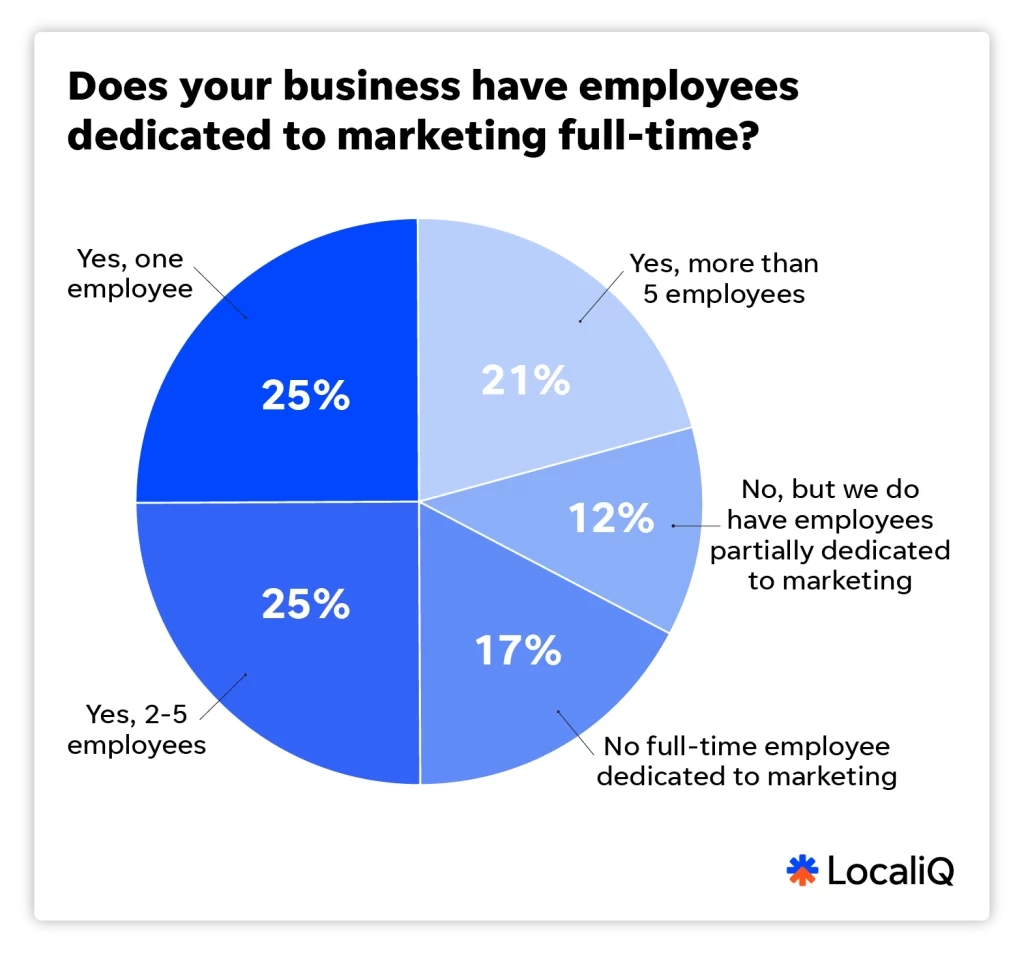
Credit: localiq.com
Challenges Faced By Small Businesses
Small businesses face numerous challenges in today’s market. They often struggle with limited resources and intense market competition. These obstacles can hinder growth and sustainability. Understanding these challenges can help small businesses develop effective strategies to succeed.
Limited Resources
Small businesses often have tight budgets. They lack the funds for large marketing campaigns. Many can’t afford advanced marketing tools. This financial constraint limits their reach. It also affects their ability to attract new customers.
Time is another limited resource. Small business owners wear many hats. They handle marketing, sales, and customer service. This multitasking can lead to burnout. It also means less time for strategic planning.
Small teams are common in small businesses. Fewer employees mean more work for each person. This can reduce efficiency. It can also limit the business’s ability to grow.
Market Competition
The market is saturated with competitors. Small businesses compete with larger companies. These bigger companies have more resources. They can offer lower prices and better deals. This makes it hard for small businesses to compete.
New businesses enter the market constantly. This increases competition. Small businesses must stay innovative to survive. They need unique selling points to stand out. This can be challenging with limited resources.
Customer loyalty is hard to maintain. Larger companies often have loyalty programs. They can offer perks that small businesses can’t. This can lead to customer loss. Small businesses must work harder to retain customers.
Role Of Technology
Technology is changing how small businesses market their products and services. It helps them reach more customers and streamline their marketing efforts. Understanding the role of technology can help small businesses stay competitive.
Automation Tools
Automation tools save time and reduce manual work. They can handle tasks like email marketing, social media posting, and customer follow-ups. This ensures consistency and frees up time for other important tasks.
Using automation tools leads to better customer engagement. They allow businesses to send personalized messages at the right time. This can increase customer satisfaction and loyalty.
Analytics Software
Analytics software helps small businesses track their marketing performance. It provides insights into what is working and what is not. This data-driven approach allows for better decision-making.
With analytics software, businesses can monitor website traffic, conversion rates, and customer behavior. This information helps in refining marketing strategies. It ensures resources are used effectively.
Future Of Small Business Marketing
The future of small business marketing holds many exciting changes. Technology advances rapidly. Customer behavior shifts constantly. Small businesses must adapt to stay competitive. New tools and strategies emerge regularly. Understanding these trends is crucial for future success.
Emerging Technologies
New technologies shape the future of marketing. Artificial Intelligence (AI) helps predict customer needs. AI can also automate tasks, saving time. Augmented Reality (AR) offers unique customer experiences. Customers can see products in their own space. Chatbots provide instant customer support. They improve engagement and satisfaction.
Adaptation Strategies
Small businesses need to adapt quickly. Embrace digital marketing tools. Use social media platforms to reach audiences. Focus on mobile-friendly content. Many customers use smartphones for shopping. Personalize marketing messages. Tailor content to individual preferences. Track performance metrics. Use data to refine strategies.

Credit: www.statista.com
Frequently Asked Questions
What Percent Of Small Businesses Struggle With Marketing?
Approximately 47% of small businesses struggle with marketing. Many face challenges in reaching their target audience and managing online presence. Effective marketing strategies are essential for growth.
What Is The Average Marketing For A Small Business?
The average marketing budget for a small business ranges from 7% to 8% of their gross revenue. This percentage can vary based on industry and growth goals.
What Percentage Of The Market Is Small Business?
Small businesses make up 99. 9% of all businesses in the US. They play a crucial role in the economy.
What Is The #1 Reason Small Businesses Fail?
The #1 reason small businesses fail is poor cash flow management. Proper financial planning is crucial for success.
Conclusion
Small business marketing statistics offer valuable insights. They highlight trends and strategies. Use these data points to improve your marketing efforts. Stay informed and adapt quickly. This can help you stay competitive. Always track and measure your campaigns. Data-driven decisions lead to better results.
Keep learning and evolving in your marketing journey. Success comes from understanding and applying these statistics. Stay committed, and watch your small business grow.


