

Discover the key differences in SaaS Marketing vs Traditional Marketing. Find out which strategy suits your business needs best!
Choosing the right strategy can be confusing. Each method has its own strengths and challenges. SaaS marketing focuses on digital tools and online platforms. Traditional marketing relies on tried-and-true methods like TV, print, and radio. Understanding the difference is crucial for success.
This comparison will help you decide which strategy fits your needs. Keep reading to learn the unique features and benefits of both SaaS marketing and traditional marketing.

Credit: rampiq.agency
Introduction To Saas Marketing
Marketing for Software as a Service (SaaS) differs from traditional marketing. SaaS products are digital, often subscription-based, and require a unique approach to attract and retain customers. Understanding SaaS marketing is crucial for any business in this field.
What Is Saas Marketing?
SaaS marketing involves promoting and selling software that customers access online. Unlike physical products, SaaS solutions are intangible. They offer services like data storage, project management, or customer relationship management. The goal is to convince potential customers of the software’s value and benefits.
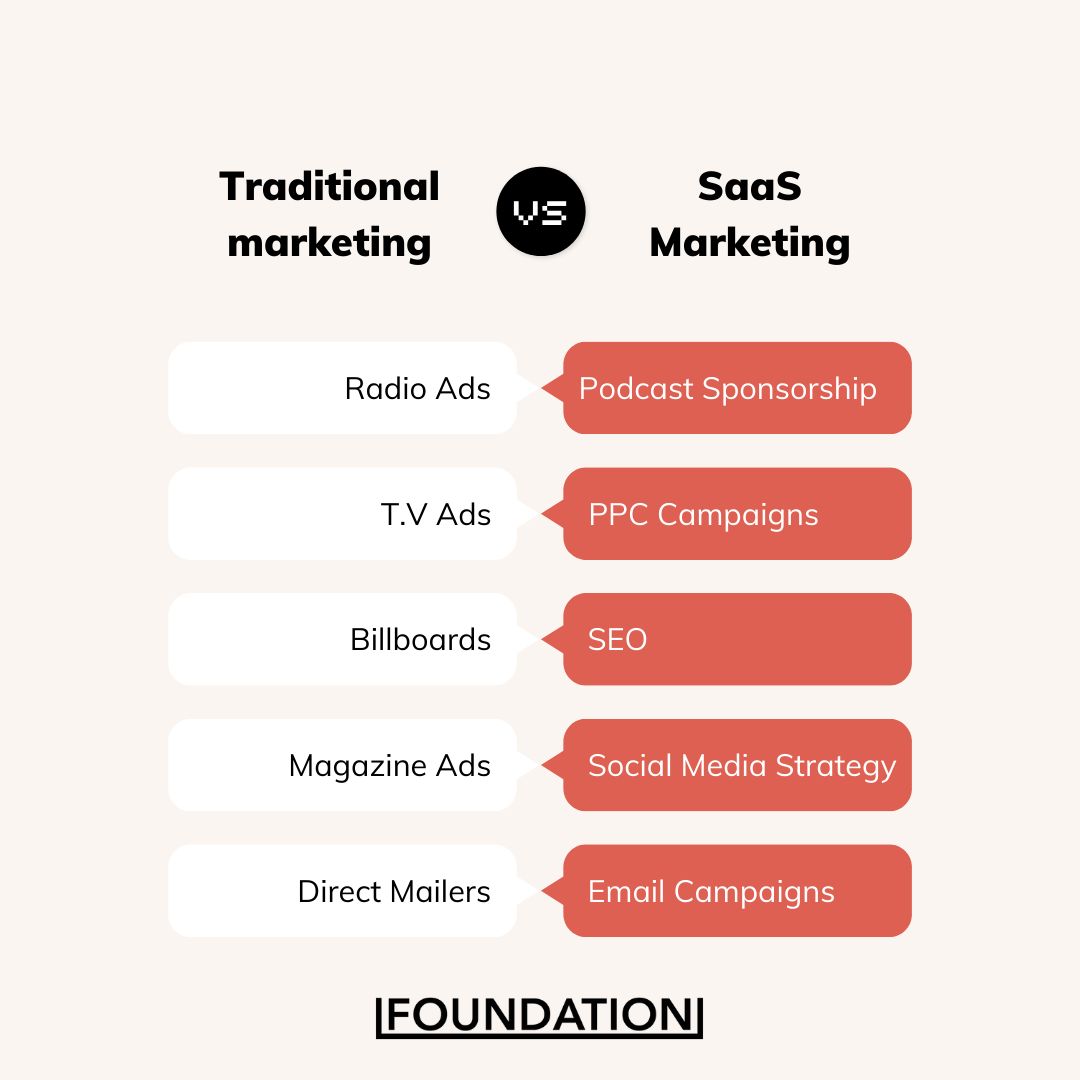
SaaS marketing strategies often focus on digital channels. Social media, email marketing, and search engine optimization (SEO) are common tools. The objective is to reach a wide audience and generate leads. SaaS marketers also emphasize customer retention and upselling. This is because retaining customers is often more cost-effective than acquiring new ones.
Importance Of Saas Marketing
SaaS marketing is essential for growth and sustainability. The competitive landscape requires businesses to stand out. Effective marketing helps build brand awareness and trust. It also educates potential customers about the product.
Good SaaS marketing can increase customer acquisition. It can also improve customer retention. Engaging content, clear messaging, and targeted campaigns play a vital role. They help in converting leads into long-term customers. Consistent marketing efforts ensure that the business remains relevant in a crowded market.
Another key aspect is the feedback loop. SaaS companies can gather data on customer usage and preferences. This information helps refine marketing strategies. It also aids in product development, ensuring the software meets customer needs.
Credit: blog.hivestrategy.com
Introduction To Traditional Marketing
Traditional marketing has been the backbone of businesses for decades. Even in the digital age, it holds a significant place. This form of marketing uses classic methods to reach its audience. Let’s dive into what traditional marketing is and why it remains important.
What Is Traditional Marketing?
Traditional marketing refers to strategies used before the internet age. These methods include print ads, TV commercials, and radio spots. Billboards, direct mail, and flyers are also part of traditional marketing.
These methods aim to reach a broad audience. They focus on creating brand awareness and driving sales. Traditional marketing uses offline channels to communicate with potential customers.
Importance Of Traditional Marketing
Traditional marketing remains vital for several reasons:
- Wide Reach: TV and radio can reach millions of people.
- Tangible Materials: Print ads and flyers are physical and memorable.
- Local Focus: Billboards and local newspapers target specific areas.
- Brand Recognition: Consistent ads create strong brand images.
Here is a comparison table to understand the reach of different traditional marketing methods:
| Method | Reach | Cost |
|---|---|---|
| TV Commercials | National/Global | High |
| Radio Ads | Regional/National | Medium |
| Print Ads | Local/National | Variable |
| Billboards | Local | Medium |
Traditional marketing builds trust through familiarity. People trust brands they see often. This form of marketing also complements digital efforts. Together, they create a cohesive strategy.
Key Differences
SaaS marketing and traditional marketing have unique approaches and methodologies. They cater to different business models and customer needs. Understanding their key differences can help in creating effective marketing strategies.
Target Audience
SaaS marketing often targets tech-savvy businesses and individuals. These customers are familiar with software and digital solutions. They seek efficiency, scalability, and convenience in their operations.
Traditional marketing, on the other hand, targets a broader audience. It includes consumers and businesses in various sectors. The focus is more on physical products and services.
Understanding the audience’s needs is crucial in both types. Tailoring messages to resonate with their specific interests can drive better engagement.
Sales Cycle
The sales cycle in SaaS marketing is generally shorter. Customers can try a product through free trials or demos. This quick access helps in faster decision-making.
Traditional marketing usually involves a longer sales cycle. Customers need more time to make purchasing decisions. They may require multiple touchpoints and interactions before buying.
Recognizing the differences in sales cycles helps in planning marketing efforts. It ensures that the strategies align with the customer’s buying journey.
Credit: foundationinc.co
Strategies In Saas Marketing
Strategies in SaaS Marketing involve unique approaches tailored to the digital landscape. Unlike traditional marketing, SaaS marketing focuses on digital channels and customer engagement. This section covers key strategies that drive success in SaaS marketing.
Content Marketing
Content marketing is a cornerstone of SaaS marketing. Quality content attracts and retains customers. It also educates potential users about the product’s value.
Types of content include:
- Blog Posts: Informative articles that address user pain points.
- Case Studies: Real-world examples showcasing product effectiveness.
- Whitepapers: In-depth guides on industry topics.
- Webinars: Live sessions that engage and inform audiences.
Creating a content calendar helps in planning and consistency. Regular posting keeps the audience engaged and drives traffic.
Seo And Sem
Search Engine Optimization (SEO) and Search Engine Marketing (SEM) are essential for visibility. SEO focuses on organic search results, while SEM involves paid ads.
Effective SEO strategies include:
- Keyword Research: Identifying relevant keywords users search for.
- On-Page Optimization: Optimizing meta tags, headers, and content.
- Link Building: Acquiring quality backlinks from reputable sites.
SEM strategies include:
- Pay-Per-Click (PPC) Ads: Placing ads on search engines.
- Retargeting: Showing ads to users who visited your site.
- Ad Copy Optimization: Crafting compelling ad copy to increase clicks.
Both SEO and SEM drive traffic to your site. They also improve lead generation and conversion rates.
Strategies In Traditional Marketing
Traditional marketing has been around for decades. It relies on tried-and-true methods to reach audiences. These strategies can still be effective, especially for local businesses. Let’s explore some key strategies.
Television And Radio Ads
Television and radio ads have been staples of traditional marketing. They reach a wide audience quickly. Here’s a closer look:
| Medium | Pros | Cons |
|---|---|---|
| Television Ads |
|
|
| Radio Ads |
|
|
Print Media
Print media includes newspapers, magazines, and brochures. These are effective for local marketing. Here are some details:
| Medium | Pros | Cons |
|---|---|---|
| Newspapers |
|
|
| Magazines |
|
|
| Brochures |
|
|
Metrics And Analytics
Metrics and analytics are vital in understanding the success of marketing strategies. They help track performance, identify areas for improvement, and optimize future campaigns. In the context of SaaS marketing and traditional marketing, the approach to metrics and analytics varies significantly.
Performance Tracking In Saas
SaaS marketing relies heavily on digital channels, making data collection easier. Various tools help track the performance of campaigns in real-time.
- Customer Acquisition Cost (CAC): Measures the cost to acquire a new customer.
- Customer Lifetime Value (CLV): Estimates the total revenue a customer will generate.
- Churn Rate: Indicates the percentage of customers who stop using the service.
- Monthly Recurring Revenue (MRR): Tracks the predictable revenue every month.
- Conversion Rates: Measures the percentage of visitors who become paying customers.
Performance tracking tools include Google Analytics, Mixpanel, and HubSpot. These tools offer detailed insights into user behavior, campaign effectiveness, and ROI.
Performance Tracking In Traditional Marketing
Traditional marketing relies on offline methods. This makes performance tracking more challenging.
- Brand Awareness: Measured through surveys and focus groups.
- Sales Volume: Tracks the number of units sold during a campaign.
- Return on Investment (ROI): Calculates the profit generated from marketing spend.
- Market Share: Indicates the percentage of total sales in an industry.
- Customer Feedback: Gathered through direct interactions and surveys.
Traditional marketing often uses TV, radio, and print ads. The performance tracking requires manual data collection and analysis.
Tables and charts can help visualize data. For instance:
| Metric | SaaS Marketing | Traditional Marketing |
|---|---|---|
| Data Collection | Automated | Manual |
| Real-Time Tracking | Yes | No |
| Customer Insights | Detailed | General |
| Tools | Google Analytics, Mixpanel | Surveys, Focus Groups |
Budget Considerations
Budget considerations play a crucial role in marketing strategies. Businesses need to evaluate costs carefully. SaaS marketing and traditional marketing have distinct cost structures. Understanding these differences can help allocate your budget more efficiently.
Cost-effectiveness Of Saas Marketing
SaaS marketing often proves more cost-effective. Digital tools and platforms reduce expenses. Automated campaigns save time and money. Analytics offer precise targeting, minimizing wasted spend. This approach allows businesses to scale efforts easily.
Subscription models also support predictable budgeting. Monthly or annual fees cover most needs. This ensures consistent costs without surprises. SaaS marketing provides flexibility, adjusting to budget changes quickly.
Costs In Traditional Marketing
Traditional marketing often involves higher expenses. Print ads, billboards, and TV spots are costly. Production costs add to the budget. Distribution can be expensive too. These methods require significant upfront investment.
Measuring ROI in traditional marketing is challenging. Tracking impact is less precise. This uncertainty can lead to overspending. Adjusting campaigns mid-way can be difficult and costly. Traditional marketing lacks the agility of SaaS marketing.
Future Trends
In the rapidly evolving landscape of marketing, understanding future trends is crucial. SaaS (Software as a Service) marketing and traditional marketing are both experiencing shifts. Each approach adapts to new technologies and consumer behaviors. This section explores these emerging trends and their implications.
Emerging Trends In Saas Marketing
SaaS marketing is increasingly data-driven. Companies use analytics to understand user behavior. This helps in creating personalized marketing strategies.
Artificial Intelligence (AI) plays a significant role. AI-powered tools automate tasks. They also provide insights into customer preferences.
Content marketing remains vital. Blogs, whitepapers, and case studies build trust. They educate potential customers about products.
Social media continues to grow. Platforms like LinkedIn and Twitter are essential for B2B marketing. They help in reaching a wider audience.
Freemium models are becoming popular. Offering free trials attracts potential users. It allows them to experience the product before purchasing.
Customer retention is a priority. Companies focus on improving user experience. They use customer feedback to enhance their services.
Evolving Trends In Traditional Marketing
Traditional marketing is also changing. It adapts to new consumer habits and technologies.
Digital transformation is key. Many businesses shift from print to online platforms. Websites and email campaigns are now essential tools.
Influencer marketing is growing. Brands collaborate with influencers to reach target audiences. It builds credibility and trust.
Experiential marketing gains traction. Events and experiences engage consumers directly. This creates memorable brand interactions.
Sustainability is a focus. Consumers prefer eco-friendly brands. Companies highlight their green initiatives in marketing campaigns.
Data privacy is important. Regulations like GDPR influence marketing strategies. Businesses ensure they comply with data protection laws.
Omnichannel marketing offers a seamless experience. Integration across various platforms ensures consistent messaging. It enhances customer engagement.
Both SaaS marketing and traditional marketing are evolving. Staying updated with these trends is essential for success.
Frequently Asked Questions
What Is Saas Marketing?
SaaS marketing focuses on promoting software as a service products. It uses digital channels to attract, engage, and retain customers.
How Does Traditional Marketing Work?
Traditional marketing uses offline methods like TV, radio, and print ads. It targets a broad audience to build brand awareness.
Which Is More Cost-effective, Saas Or Traditional Marketing?
SaaS marketing is typically more cost-effective. It uses targeted digital campaigns that can be easily measured and optimized.
What Are The Key Differences Between Saas And Traditional Marketing?
SaaS marketing relies on digital strategies and data analytics. Traditional marketing uses offline channels and broad targeting methods.
Conclusion
Choosing between SaaS marketing and traditional marketing depends on your business needs. SaaS marketing offers modern tools and real-time data. Traditional marketing has proven methods and can still be very effective. Both have their own strengths and can work together.
Understanding your audience is key. Use the right mix for your goals. Make smart decisions based on your budget and resources. Marketing success requires flexibility and adaptation. Keep learning and stay updated with trends. Your business will benefit from a balanced approach.
